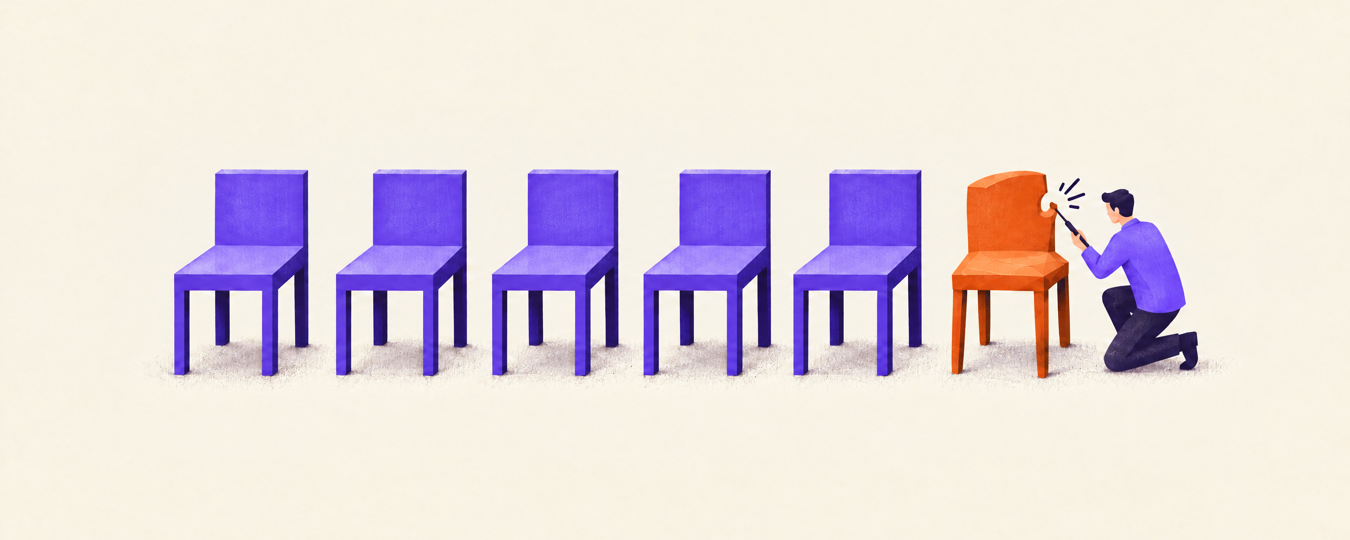
Software design just reached its factory era. Flawless is everywhere, and cheap perfection is the new default.
In 19th-century Europe, hand-carved wooden furniture was a sign of wealth and patience. Every curve was slightly unique, shaped by a craftsperson who spent decades learning the wood and mastering their tools. Then steam-powered factories arrived, churning out identical, perfectly symmetrical tables faster than any human could keep up. Suddenly, perfect symmetry was cheap and everywhere. Wealthy buyers wish to stand out. If everyone can be symmetrical, then it loses its value. So they started hunting for hand-carved flaws, tool marks, and visible human signatures. When flawless became effortless, value flipped overnight.
Clean without intention is empty
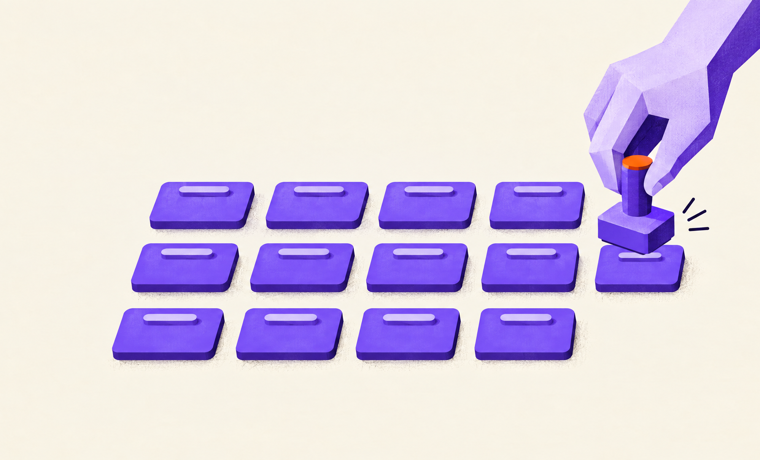
We have officially reached peak visual homogenization in software. When getting a sleek interface costs a subscription service, a copy-pasted prompt, and four seconds. Perfection loses its punch. Every new app looks like it was born in the exact same corporate incubator, wearing the same muted outfit, speaking in the same polite tone. Sterile, safe, and wildly uninspiring.
When every product looks top-tier on paper, visual polish loses value. It becomes a baseline wallpaper. If your interface looks identical to ten thousand automated templates generated this morning, users will treat it like disposable utility. Flawless execution used to signal credibility. Now, it just signals that you know how to type a prompt into a generator.
Perfect is getting boring
When was the last time a piece of software actually made you feel something? It was almost certainly not a pristine glassmorphism button. It was a weird micro-interaction, a hilarious piece of copy, or a bizarre layout choice that felt distinctly human.
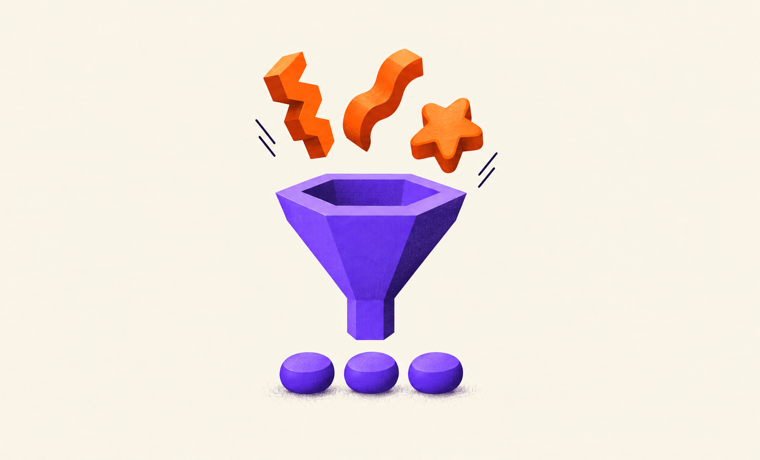
Humans are messy, opinionated, and full of strange habits. Automated design tools are not. They are statistical average machines, trained to churn out the safest, most agreeable version of a layout. Algorithms optimize for consensus. They smooth out every rough edge until all that remains is a polite, forgettable blur.
When you remove all friction and quirk, you strip away character. A product without character cannot build true brand loyalty. People do not fall in love with a statistical mean. They fall in love with flavor.
Bring back the weird stuff
So, what actually builds value when the pixels themselves are free? Craft. But not craft in the old sense of spending three weeks tweaking a color variable in a Figma design system. Craft now means having a sharp, uncompromised perspective.
It is the deliberate choice to break a standard design convention because it serves your specific user better. It is custom illustration that looks slightly offbeat instead of stock 3D avatars. It is tactile UI choices, weirdly specific sound effects, and physical feedback that make an app feel alive under your fingers.
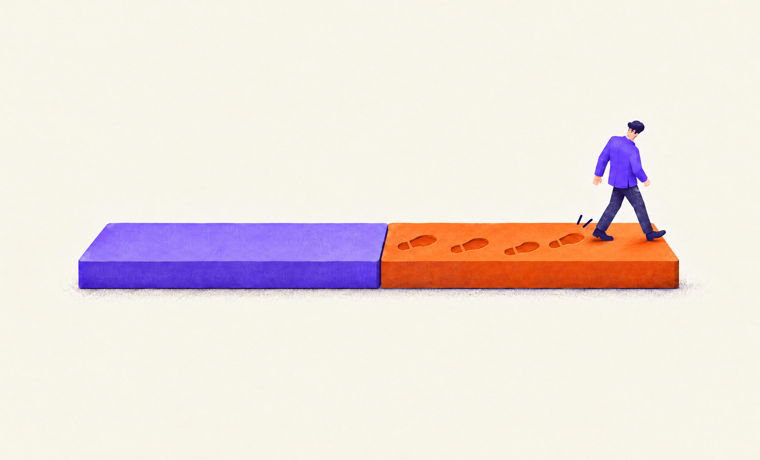
Tactile design creates muscle memory. When software feels distinct to use, it leaves a footprint in the user's mind. You remember the deliberate weight of a custom gesture long after you forget another slick generic hero section.
Flavor always beats polish
The web is currently drowning in automated slop. Endless streams of synthetic images, copy-pasted UI kits, and identical landing pages are filling up our screens every single day. The natural human reaction to all this noise is not demanding more polish. It is craving authenticity.
When hyper-polished templates are everywhere, perfection is obvious human intent.
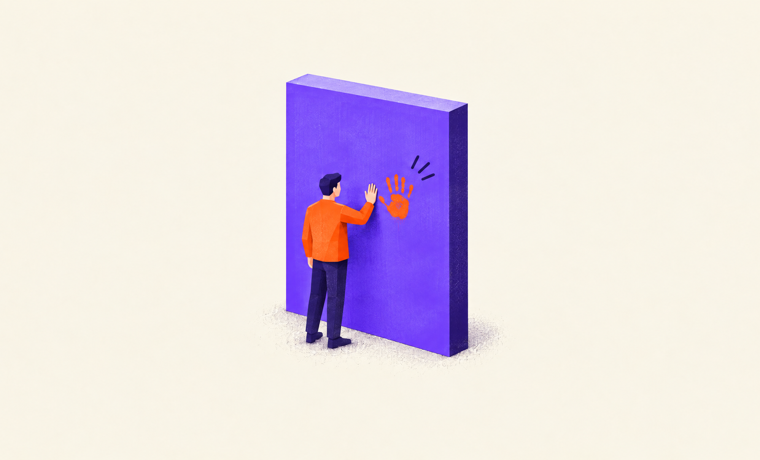
You do not win by looking cleaner than the machine. You win by being more opinionated than the algorithm. Show your work. Leave a few obvious fingerprints on the glass. The digital brands that survive and build real loyalty over the next decade will not be the ones with the smoothest gradients. They will be the ones brave enough to look, feel, and act like real humans made them.