How over-reliance on smart systems is silently eroding the core skills that keep products and organizations alive.
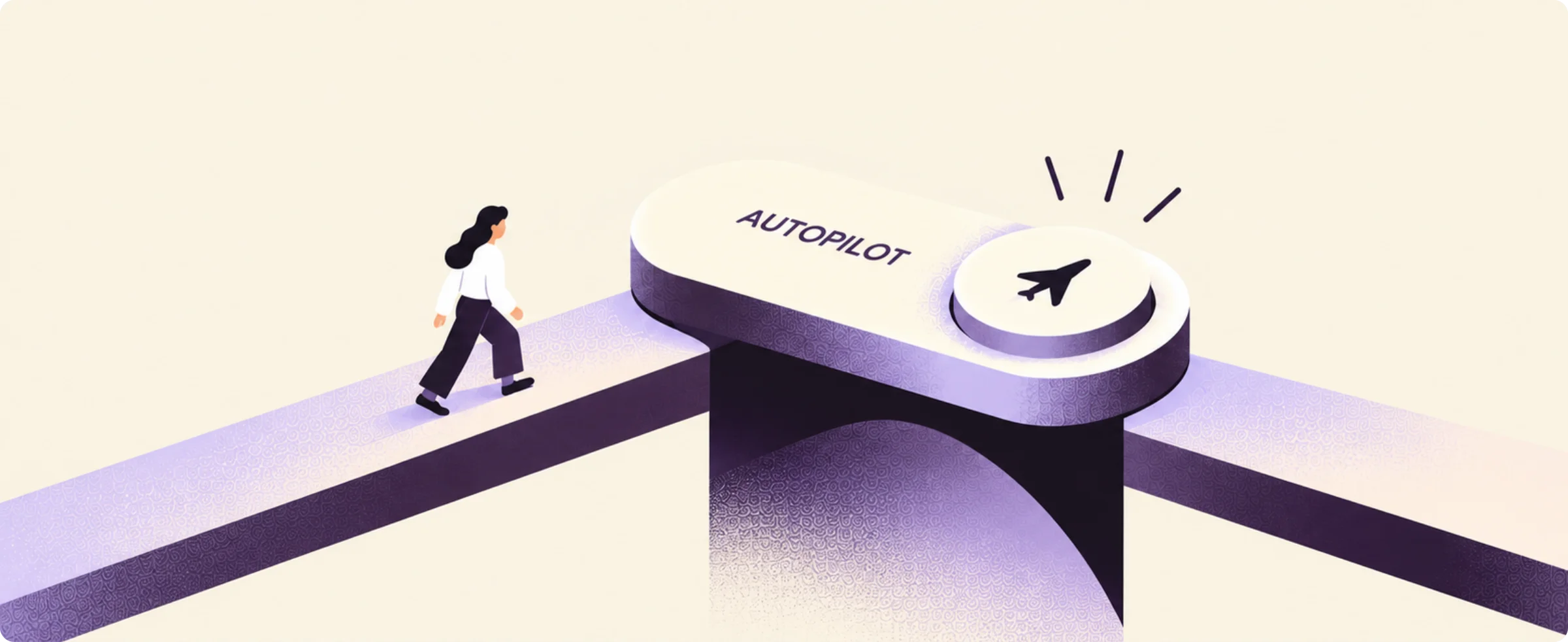
A decade ago, commercial aviation ran into an unexpected problem. Airliners had become so good at flying themselves that pilots were barely touching the flight controls. Cockpits were quiet, automated, and efficient. But things fell apart as soon as unexpected bad weather hit, sensors froze, or the computer disconnected without warning. Some pilots panicked, spending critical seconds trying to figure out what the software was doing instead of grabbing the wheel to fly the plane manually. The aviation industry started warning against automation addiction because tools built to eliminate human mistakes were accidentally destroying basic human capability.
We are running the exact same experiment across software engineering, product design, and business strategy right now. And we are setting up the exact same crash.
How skills fade
Losing basic skills is a quiet process. It usually looks like a massive win at first.
A junior developer uses an AI coding assistant to write their basic functions. A product manager asks a chatbot to summarize a week of user interviews. The charts go up. The team moves faster. But underneath that speed, the foundation gets weak.
Like a developer who never actually writes a database query from scratch. A server goes down at two in the morning. They pull up the raw logs and just stare at them. They do not know how to read the errors because they never built the muscle memory of breaking things and fixing them manually.
Like an automated tool spitting out code that looks perfect but hides a massive security flaw. Nobody on the team has the raw experience to spot it.
You cannot step in to fix a system you do not actually understand.
Shortcuts don't build instinct
Experience is mostly just a collection of old mistakes.
It is the senior designer who knows a layout will fail on mobile before they even test it. Or the lead engineer who spots a bottleneck in a server plan in three seconds. Software promises to let you skip those mistakes. It offers to give a new hire the output of a ten-year veteran in one click.
This is a trap.
A tool can give you an answer. It cannot give you judgment. Judgment comes from doing the work, getting it wrong, and feeling the pain of fixing it. When we tell teams to automate every single wireframe and strategy doc, we stop training future leaders. We just train people to push buttons when the weather is nice.
Keep the driver awake
We do not need to throw out our tools. Telling an engineer to write everything in a basic text editor is like asking a pilot to hand-fly across the ocean. It makes no sense. The goal is designing software that keeps people involved.
Like forcing sanity checks. Important actions should make a user pause and verify the math before the computer takes over.
Like keeping manual controls obvious. Internal dashboards need a giant, easy way to grab the wheel the second a system acts up.
Like workflows that ask questions. They should force you to solve problems instead of just clicking approve over and over.
A tool that makes a user dumber is a bad tool.
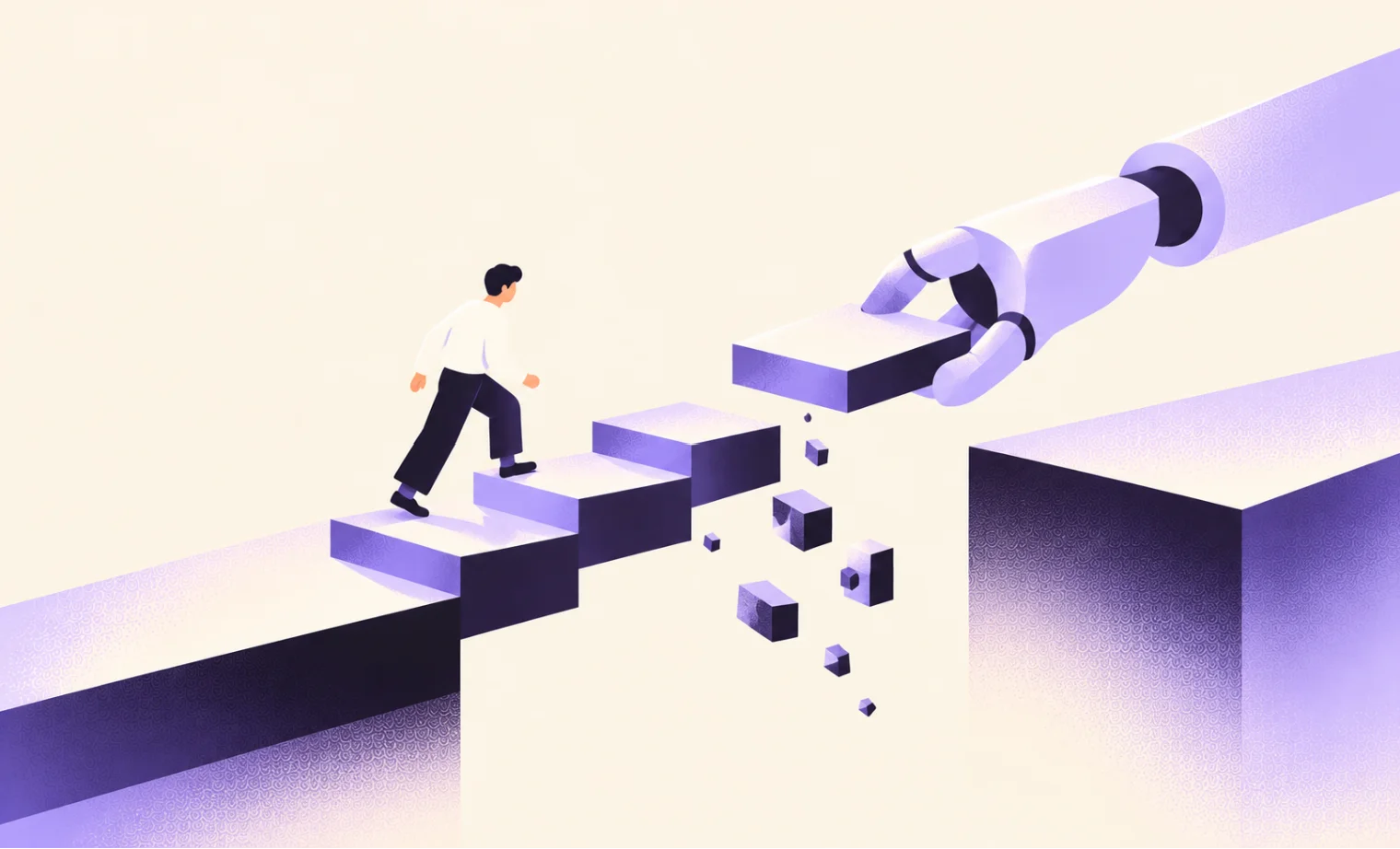
When the autopilot cuts out
Going fast is easy when the system works perfectly. Surviving a disaster is the hard part.
Like a smart system hallucinating a weird clause into a client contract. Or an automated pipeline dumping corrupt data into your main database. An algorithm is not going to fix that for you. A human who knows the basics will.
Software is supposed to make human skills stronger. It is not supposed to replace them. When we build products that force people to stay sharp, we get more than good metrics. We get teams that can actually survive a storm.